The 25-Year Rule: Which Japanese Cars Can You Import to the USA?
How the 25-year rule decides which Japanese cars you can import to the USA, why the build date matters, and what to check before you bid.
On this page
Before you fall for a car at a Japanese auction, there is one question to answer first: is it old enough to come into the US?
For most Japanese-market cars, the answer comes down to the 25-year rule. Here is how it works, and the details that catch people out.
What the 25-year rule says
US safety standards don’t apply to a vehicle that is 25 or more years old. That exemption comes from the safety regulator, NHTSA, under 49 CFR 591.5.
In practice, it means a Japanese-market car that was never sold in the US can be imported once it turns 25, without being modified to meet US safety standards.
The age is counted from the build month
NHTSA counts the age from the month and year the car was built, not just the year.
A car built in March 2001 becomes eligible in March 2026. One built in November 2001 has to wait until November 2026.
You declare the age in box 1 of form HS-7, with the date of manufacture. Your customs broker files that form when the car arrives.
Build date or first registration?
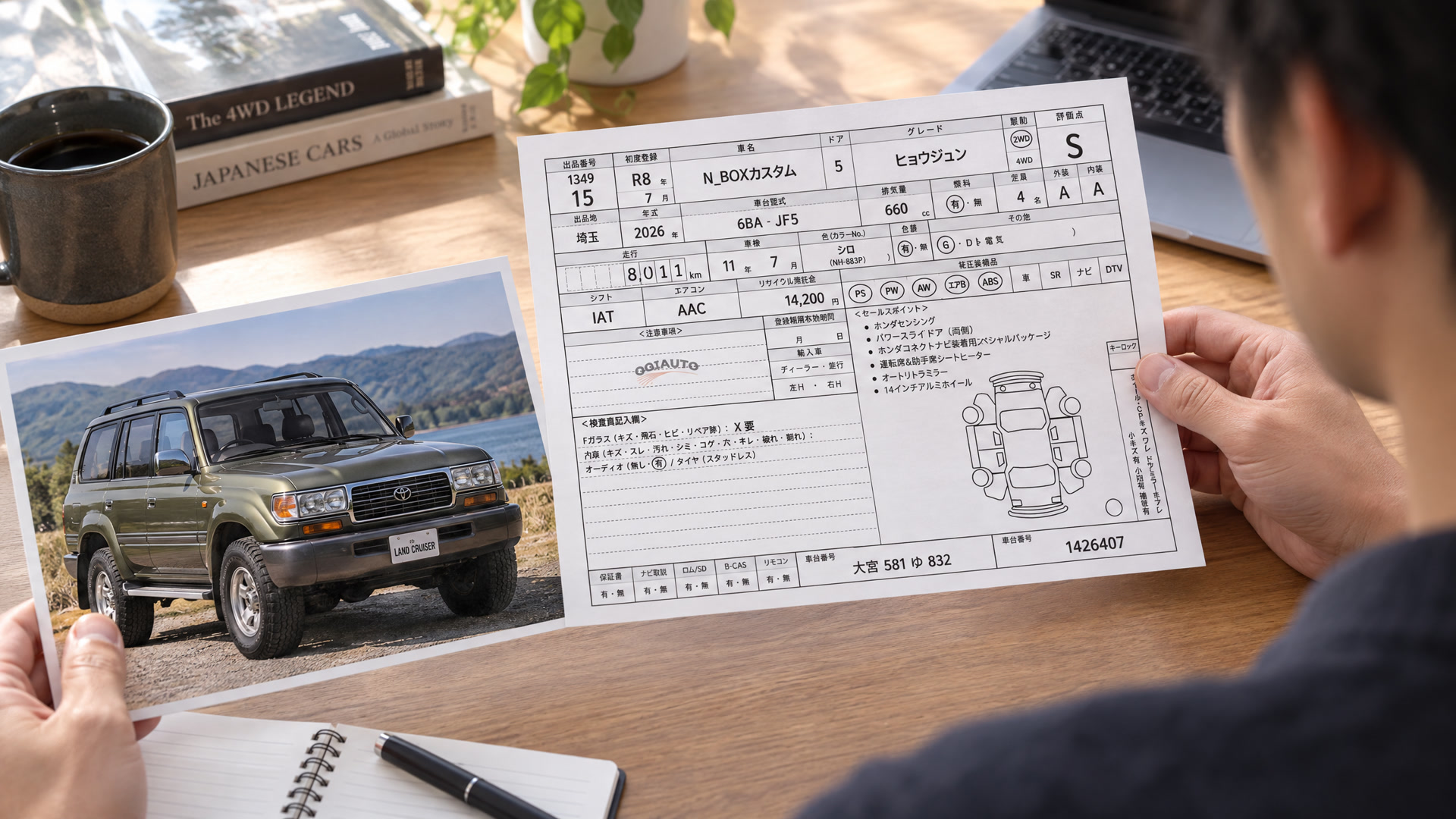
This is where many buyers slip up. Japanese papers usually show the date the car was first registered, which can be months after it was built.
The safety rule uses the build date. So check the manufacturer’s plate on the car and keep proof of its age. Where there is no label, NHTSA accepts documents such as the original sales invoice or a registration record.
We check the build date before you bid and send you what we find: a photo of the manufacturer’s plate where the car has one, and the Japanese registration papers. In some cases official confirmation of the build date isn’t possible. If the build date decides whether the car can be imported, talk to us before you bid.
The EPA rule starts at 21 years
Emissions have their own exemption. EPA’s starts earlier, at 21 years, counted by calendar year, for cars in their original, unmodified configuration. It is code E on EPA form 3520-1.
Because the safety rule still needs 25 years, 25 is the number that matters in practice.
One warning: a car with a replacement engine can lose the EPA exemption unless the engine is the same model as the original. If your car has been modified, ask EPA’s imports hotline first.
What about cars under 25 years old?
A car under 25 that was never sold in the US has to go through a Registered Importer, be modified to meet US safety standards, and be covered by a DOT bond of 150% of its value. If it isn’t brought into line, it must be exported or destroyed.
For most Japanese-market cars, that is impractical or impossible.
There is another option. You can buy the car now and store it in Japan until it turns 25, then ship it. Storage is free for 30 days after payment, then 1,000 yen per day, and a car that isn’t 25 yet can wait in Japan through our sister company JPD Japan.
Federal rules first, then your state
Passing the federal rules doesn’t mean you can register the car where you live.
California has no 25-year exemption from its own emission rules, and several states restrict kei trucks. Check with your state DMV before you buy.
Where to go next
The 25-year rule chapter of our import guide covers this in more detail, and the state registration chapter covers what happens after customs.
Have a car in mind? Send us an inquiry with the model, your budget and your state. We’ll tell you whether it can be imported before you spend anything.
Thinking about a car from Japan?
Our free import guide walks you through every step, from the 25-year rule to registering the car in your state.